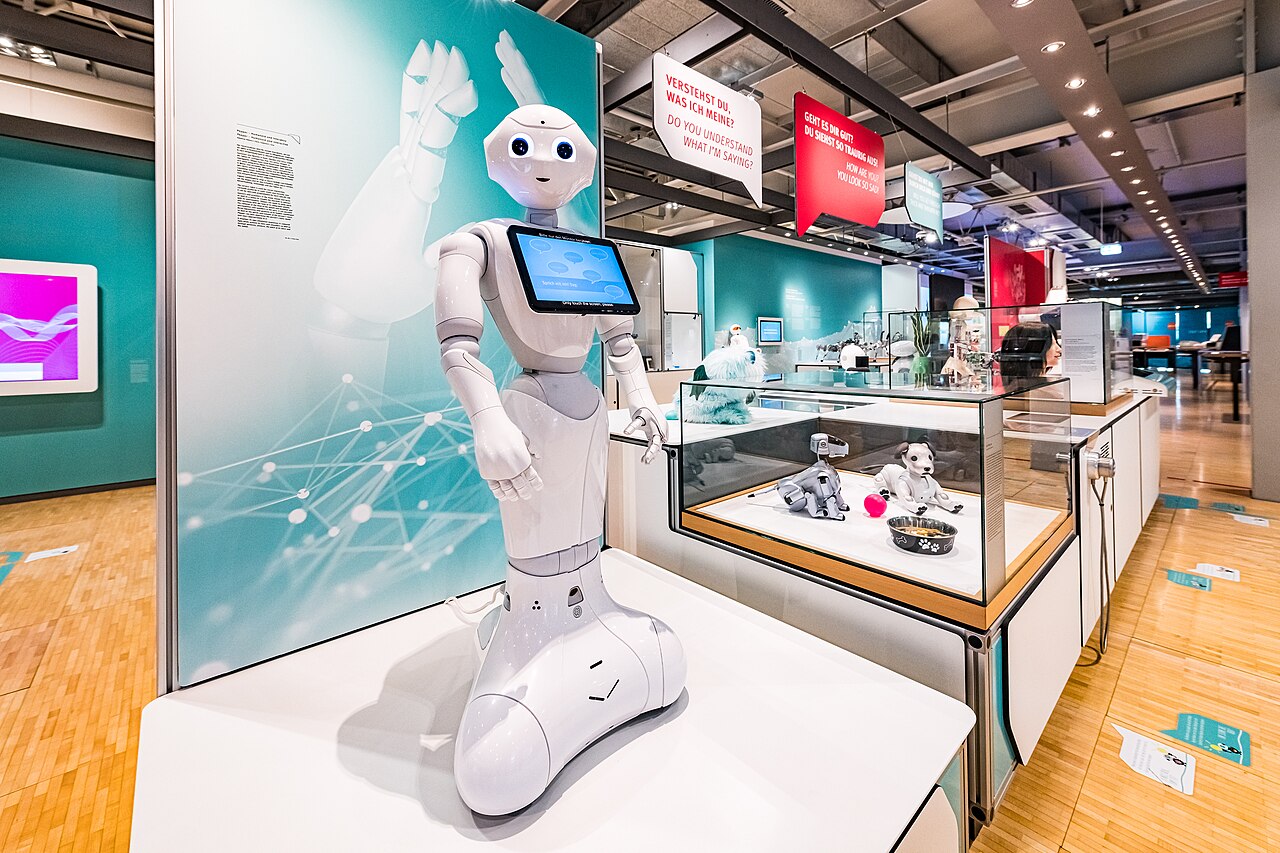
From Concept to Reality: AI Agents in Everyday Life
Just two years ago, autonomous AI agents were mostly a topic for research labs and tech giants. In 2026, that has fundamentally changed. Models run locally on a Raspberry Pi 5, Home Assistant talks directly to a self-hosted LLM, and n8n workflows use agents that make decisions independently.
But what exactly is an AI agent, and why is now the right time to start exploring them?
What Makes an AI Agent?
A classic language model answers a question — and that’s it. An AI agent, on the other hand, can:
- Pursue goals, not just respond to prompts
- Use tools (call APIs, read files, execute code)
- Plan multiple steps and pass results between them
- Collaborate with other agents
The key paradigm shift: instead of specifying *how* to do something, you tell the agent *what* the goal is. Intent-based computing instead of instruction-based computing.
The Most Important Trends in 2026
1. Multi-Agent Systems Become the Standard
Single agents hit limits quickly. The answer: teams of specialized agents that solve complex tasks together. Frameworks like CrewAI (44,000+ GitHub stars) and Microsoft Research’s AutoGen (54,000+ GitHub stars) make it possible to coordinate agents with clearly defined roles — researcher, writer, reviewer — into a coherent workflow.
For home users, this is especially interesting: these systems can run entirely locally, with no dependency on cloud APIs.
2. Local LLMs Have Reached Maturity
Ollama has established itself as the de facto standard for local model management. A single command is enough to start models like Llama 3.2, Mistral 7B, or DeepSeek-R1 — with an OpenAI-compatible API that works with virtually every tool.
Hardware requirements in 2026 are manageable:
| Model | RAM Required | Best For |
|---|---|---|
| Llama 3.2 3B | 4 GB | Simple tasks, fast responses |
| Mistral 7B | 8 GB | Good all-round model |
| Llama 3.1 8B | 8–10 GB | More complex reasoning |
| Qwen 2.5 Coder | 8 GB | Code generation |
A Raspberry Pi 5 with 8 GB RAM can run Llama 3.2 3B without issue — not lightning fast, but completely adequate for many home automation tasks.
3. Home Assistant Becomes the AI Control Center
Home Assistant has evolved into the natural integration platform for local AI agents. Since the blog post from September 2025, HA supports full AI Task Entities, tool-calling, and agentic loop support.
The home-llm integration goes even further: a local model gets access to all HA entities and can control devices autonomously, without having to explicitly program every command. The model understands context — “it’s getting cold” can result in the heat being turned up and the blinds closing.
Practical Example: Local Voice Assistant with Whisper + Ollama
Microphone → Whisper (Speech-to-Text, local)
           → Ollama Llama 3.2 (Intent + Tool-Calling)
           → Home Assistant REST API
           → Device is controlled
Latency: under 2 seconds on a Raspberry Pi 5 with 16 GB RAM. Completely offline — no data leaves the home network.
4. Raspberry Pi AI HAT+ 2: Dedicated AI Hardware for the Pi
Since January 2026, the Raspberry Pi AI HAT+ 2 has been available. The Hailo-10H accelerator brings up to 40 TOPS (INT4) and 8 GB of its own LPDDR4X memory. This significantly offloads the main processor and enables faster inference at noticeably lower power consumption.
For home automation, this means: a Pi 5 with AI HAT+ 2 can continuously evaluate sensor data, detect anomalies, and act proactively — without noticeable performance overhead for other tasks.
5. n8n + Ollama: Visual Agent Workflows Without Coding
n8n has established itself as the ideal platform for agentic workflows that don’t require programming. Combined with a local Ollama server, powerful automations emerge:
- Energy reporting: Sensor data from Home Assistant → Ollama analyzes → WhatsApp summary
- Smart alerts: Anomaly in consumption data → Agent evaluates context → Push notification only when truly relevant
- Shopping assistant: Inventory sensor drops below threshold → Agent checks calendar and prices → Shopping list in Notion
A simple n8n setup for local AI:
{
  "nodes": [
    { "type": "n8n-nodes-base.scheduleTrigger" },
    { "type": "@n8n/n8n-nodes-langchain.lmOllama",
      "parameters": { "model": "llama3.2", "baseUrl": "http://localhost:11434" }
    },
    { "type": "@n8n/n8n-nodes-langchain.agent" }
  ]
}
Getting Started: Practical Recommendations
Level 1 — Experiment locally (doable right now):
- Install Ollama:
curl -fsSL https://ollama.com/install.sh | sh - Pull a model:
ollama pull llama3.2 - Start Open WebUI as a chat interface via Docker
Level 2 — Connect to Home Assistant:
- Install home-llm Custom Integration via HACS
- Configure the Ollama endpoint in HA
- Set Assist to use your local LLM as the conversation agent
Level 3 — Build your own agents:
- Connect n8n with the Ollama node
- Build first agentic workflows for energy reporting or notifications
- Optional: CrewAI or LangGraph for more complex multi-agent scenarios
What’s Coming Next?
Development continues to accelerate. A few trends taking shape in 2026:
- Embedded agents: Smaller, specialized models running directly on microcontrollers — first experiments with ESP32 and Cortex-M are underway
- Persistent memory: Agents that learn across sessions and permanently store personal preferences
- Local computer use: Agents that operate the desktop — currently cloud-only, but first local implementations are on the horizon
Conclusion
2026 is the year AI agents found their way from data centers into the living room. The combination of powerful local hardware (Raspberry Pi 5, AI HAT+), mature frameworks (Ollama, Home Assistant, n8n), and improved models makes it possible to run real agent systems without any cloud dependency.
The barrier to entry has never been lower — and full control over your own data stays entirely with you.
Sources: